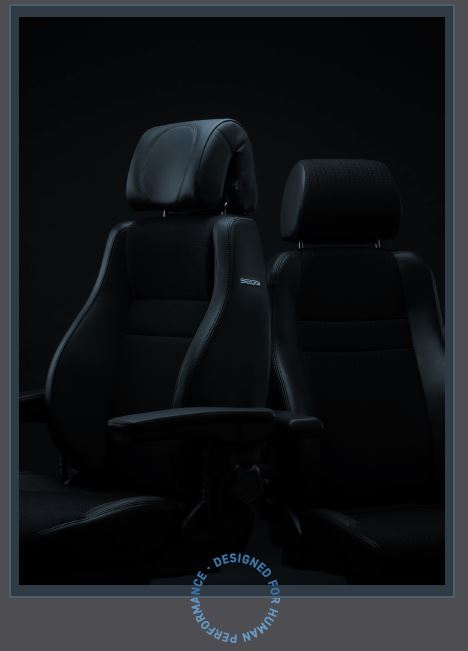
A control room chair is not bought for one person. It is bought for a workstation that is never empty. Early, late and night shift sit on the same chair, with different heights, different weights and different habits. An office chair is built for eight hours on five days a week. A 24/7 chair has to last 8,760 hours a year and adjust to the next person in seconds.
For control rooms, dispatch centres and security operations, controlrooms relies on chairs built for exactly this: the BMA Secur24 in its Basic and Exclusive versions, the Axia Focus 24/7 for surveillance combined with intensive screen work and, as an alternative, the Svenstol S5. All of them are designed for round-the-clock use and carry their warranty explicitly on that basis.
What separates a control room chair from an office chair
The difference is not the upholstery, it is the mechanism. A chair in shift operation is readjusted several times a day, carries people well above 100 kg and is used at night just as hard as during the day. What matters:
- Heavy-duty mechanism with a load capacity well beyond office standards – up to 234 kg on the Secur24
- Weight adjustment that adapts to the next person without tools or instructions
- Lumbar support adjustable in height (and on the Exclusive also in depth)
- Seat depth adjustment, so tall and short operators can use the same chair correctly
- Controls for left- and right-handed users
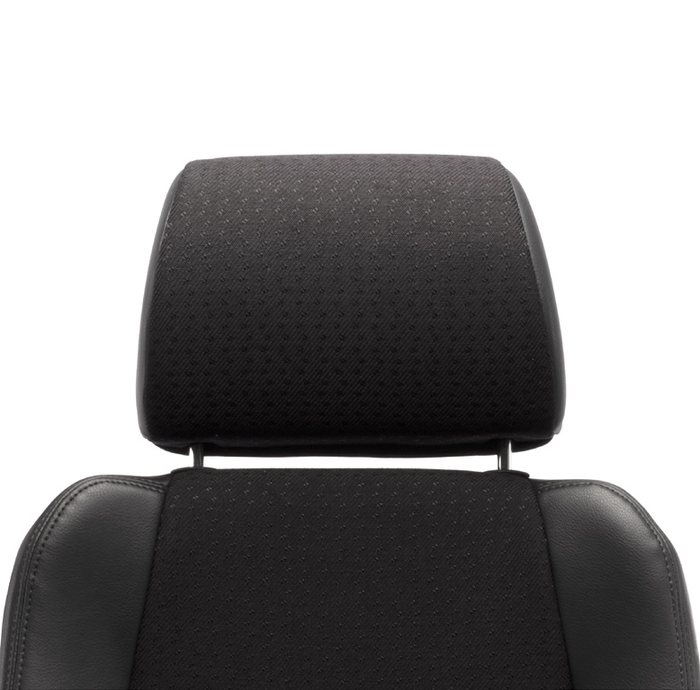
- Hard-wearing covers – Climatex Ultra with 500,000 and Staccato with 1,500,000 rub cycles
- A warranty for 24/7 use, not for office use
The chairs are tested to EN 1335 (office work chairs) and the British BS 5459, which tests office chairs for round-the-clock use.
BMA Secur24: the control room chair for surveillance and dispatch
The Secur24 is made by BMA Ergonomics in the Netherlands, a manufacturer specialising in 24-hour chairs. It is built for workstations where people observe, monitor and act fast when it counts: police, ambulance and fire dispatch centres, surveillance centres in the oil, chemical and process industries, prisons and hospitals, and bridge and lock control rooms.
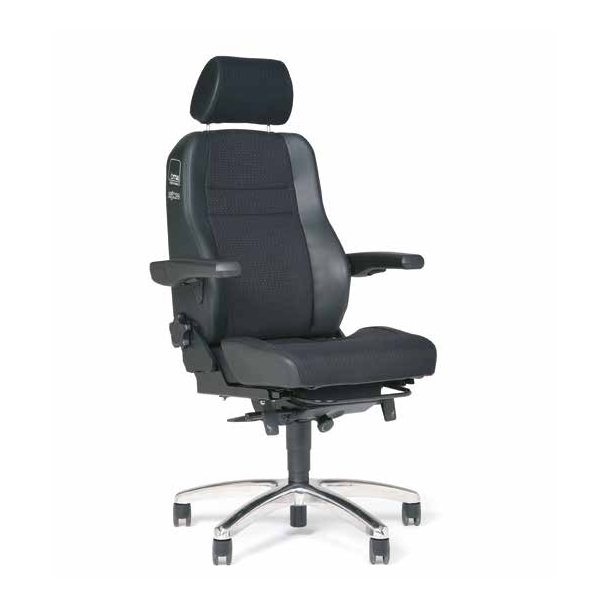
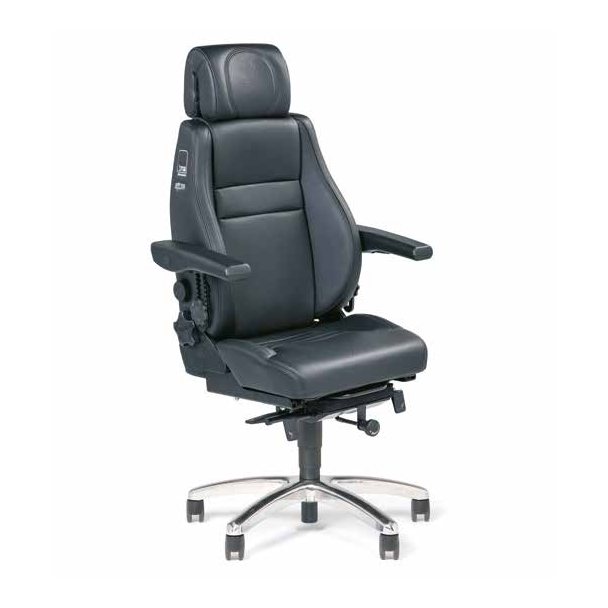
Both versions offer weight adjustment from 40 to 150 kg, a seat tilt of +5° to −14° and a backrest tilt of −12° to +22°. The extra-thick seat cushion and the ergonomically shaped backrest are designed for long sitting times. The manufacturer grants a three-year full warranty for use around the clock, seven days a week.
Options and accessories
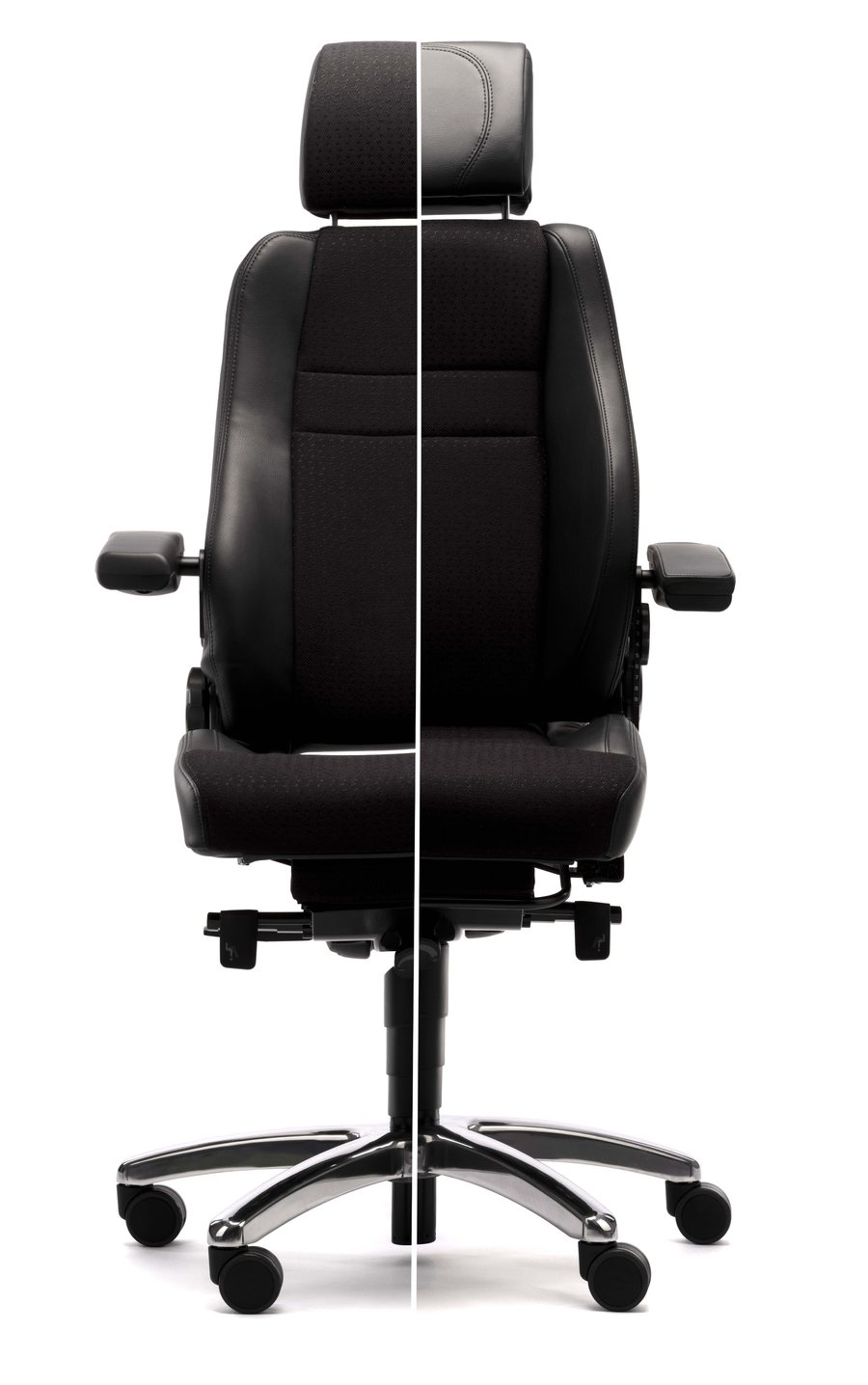
The Secur24 is modular. Depending on the workstation you choose:
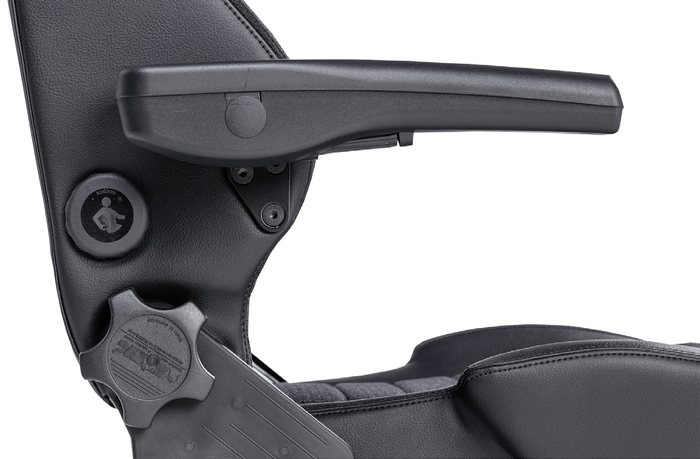
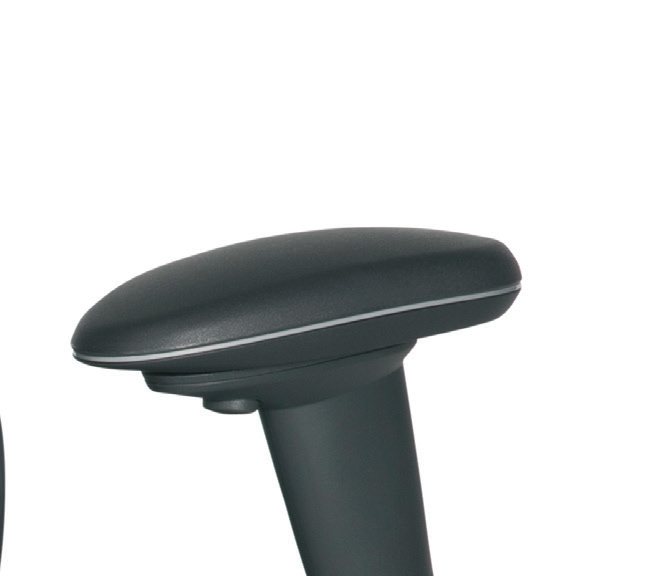
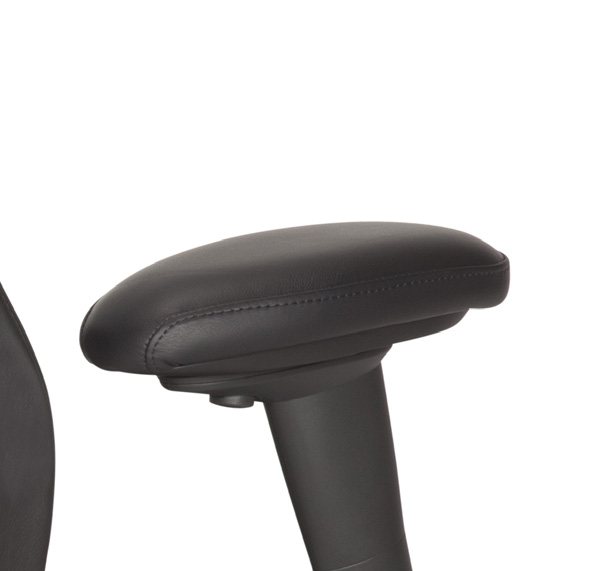
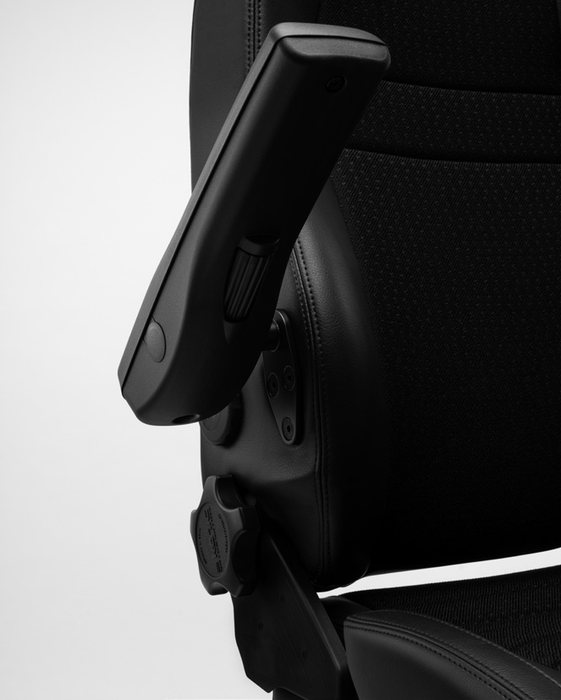
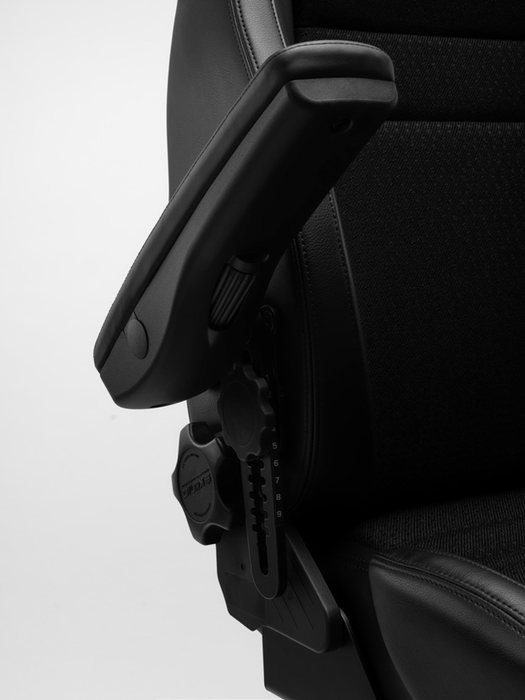
- Armrests in four versions: flip-up, flip-up and height-adjustable, multi-function or padded XL multi-function
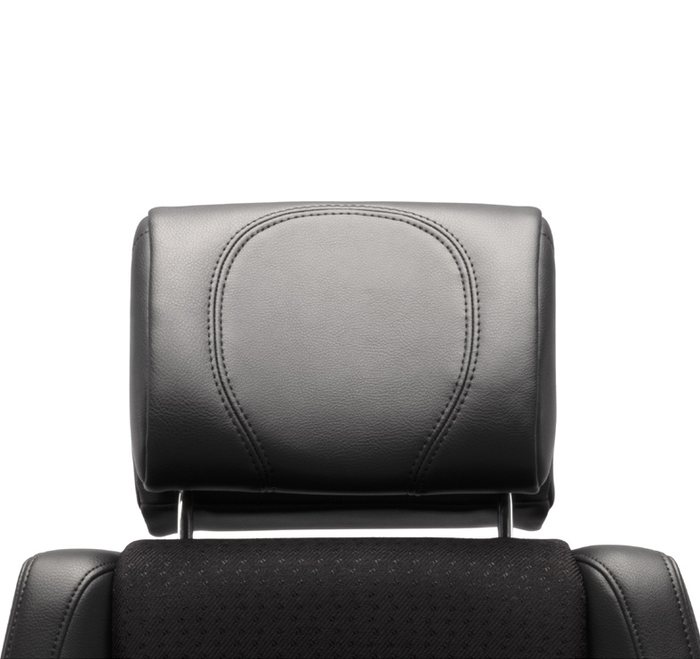
- Headrests for Basic and Exclusive, with protective cover and disposable hygiene covers
- Holster cut-out and leather upholstery protection for armed staff in police and security services
- Protective covers for backrest and seat, washable
- Gas springs for different seat heights and castors for hard or soft floors
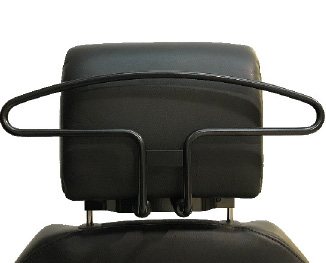
- Coat hanger on the headrest
- Base in black or polished aluminium
- Company logo embroidered on the cover or headrest
Download Secur24 datasheet (PDF, German)
Axia Focus 24/7: for surveillance and intensive screen work
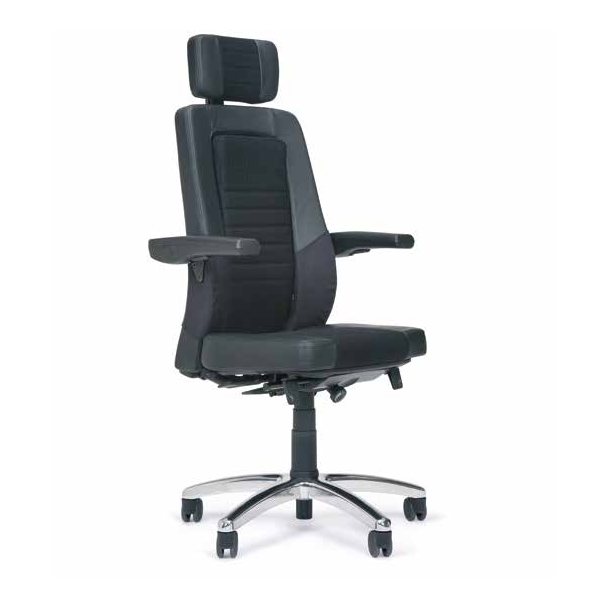
The Axia Focus 24/7, also made by BMA Ergonomics, is built for workstations where observation and focused screen work come together: police, ambulance and fire dispatch centres, alarm receiving centres, traffic and air traffic control and IT operations centres. Its signature feature is the automatic lumbar support: a moving centre section in the back cushion follows the body and supports the back without anyone having to readjust it.
- automatic lumbar support
- fabric and automotive leather cover, optionally full leather
- seat height 40–53 cm, seat depth adjustment of 80 mm
- weight adjustment 40–150 kg, load capacity up to 200 kg
- armrests in four versions, including flip-up and height-adjustable
- height- and angle-adjustable headrest optional
- aluminium base Ø 68 cm, castors for hard or soft floors
- holster protection, protective covers and logo embroidery optional
- three-year full warranty for round-the-clock use
The alternative: Svenstol S5
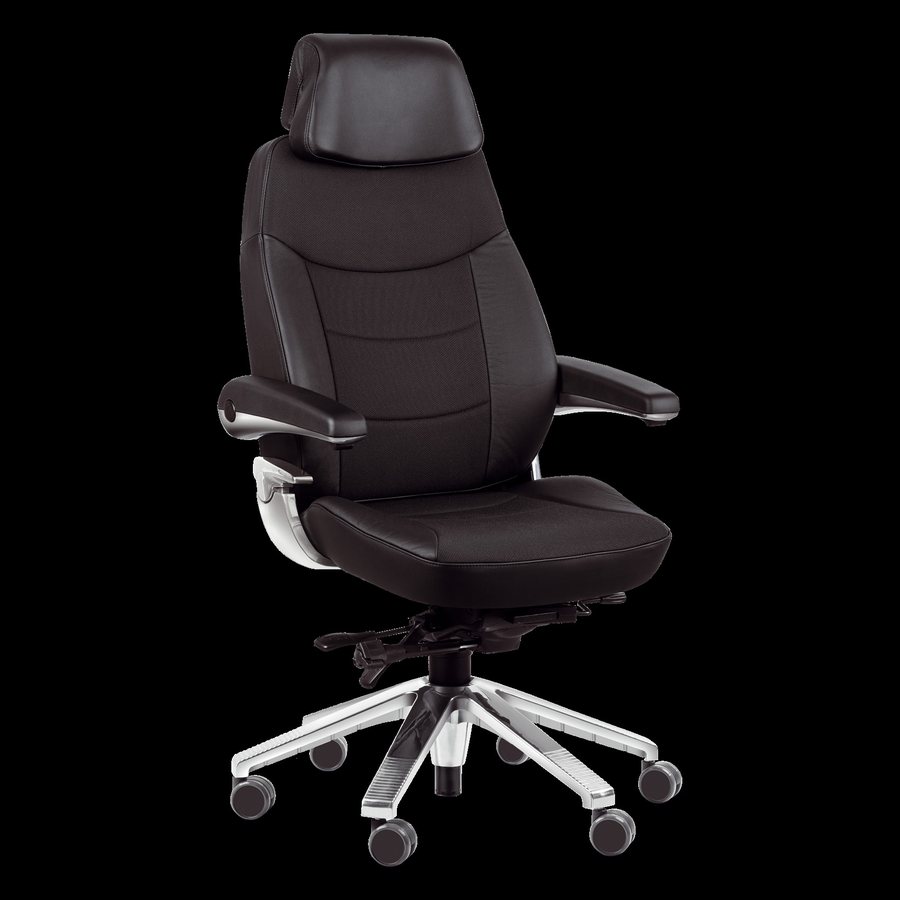
The Svenstol S5 is a 24-hour chair whose upholstery combines the seating comfort of vehicle seats with the requirements of workplace ergonomics. It is the right choice when a longer warranty, a higher seating position or an environmental label is required.
- five-year full warranty for 24-hour use
- activePlus mechanism for active sitting, weight adjustment 45–150 kg
- load capacity up to 200 kg, up to 230 kg as the 150+ version
- comfortPlus cold-foam upholstery, 8 cm seat cushion
- seat height 44–56 cm, 39–47 or 48–60 cm with a different gas spring
- six-arm polished aluminium base Ø 72 cm, six load-braked castors
- pneumatic or mechanical lumbar support, seat depth 41–51 cm optional
- holster-resistant cover, protective covers, coat hanger, logo embroidery
- GS, EN 1335, BS 5459, DIN 68877, Blue Angel
The control room chairs compared
| Feature | Secur24 Basic | Secur24 Exclusive | Axia Focus 24/7 | Svenstol S5 |
|---|---|---|---|---|
| Seat height | 41–53 cm | 41–53 cm | 40–53 cm | 44–56 cm (optional 39–47 / 48–60 cm) |
| Seat depth adjustment | optional, 40–52 cm | standard, 40–52 cm | 80 mm | optional, 41–51 cm |
| Lumbar support | 2-way (height) | 4-way (height and depth) | automatic | pneumatic or mechanical |
| Weight adjustment | 40–150 kg | 40–150 kg | 40–150 kg | 45–150 kg (150+: 45–200 kg) |
| Load capacity | 234 kg | 234 kg | 200 kg | 200 kg (150+: 230 kg) |
| Base | aluminium Ø 68 cm | aluminium Ø 68 cm | aluminium Ø 68 cm | polished aluminium Ø 72 cm, 6-arm |
| Headrest | optional | optional, comfort version | optional, height and angle adjustable | optional |
| Holster equipment | optional | optional | optional | optional |
| Warranty for 24/7 use | 3 years | 3 years | 3 years | 5 years |
| Standards and labels | EN 1335, BS 5459 | EN 1335, BS 5459 | EN 1335, BS 5459 | GS, EN 1335, BS 5459, DIN 68877, Blue Angel |
Test the chairs where they have to perform. A control room chair does not prove itself in a catalogue, but after several shifts at a real workstation. That is why we provide Secur24, Axia Focus 24/7 and Svenstol S5 for trial directly on your site – your operators sit on them before you decide.
Chair, desk and monitor belong together
A good chair in front of a badly dimensioned desk solves nothing. Seat height, desk edge, armrest, monitor distance, viewing angle to the video wall and legroom depend on each other. That is why we always choose the chair together with the operator desks from our own control room furniture manufacturing. Moving computers out of the room via KVM matters for ergonomics too: less noise and heat at the desk changes how a twelve-hour shift feels.
Two examples: in an emergency dispatch centre with raised work surfaces, the chair needs a tall gas spring – the Svenstol S5 reaches a seat height of 60 cm with it. In a security operations centre with armed staff, the holster-resistant cover decides how long cover and upholstery hold up.
Hygiene in shift operation
When three shifts share one chair, hygiene becomes an operational issue. All three chair families can therefore be fitted with washable protective covers for seat and back and with disposable covers for the headrest. The covers are dirt-repellent and easy to clean.
Control room solutions from a single source
controlrooms plans and delivers the complete operator workstation: control room furniture and chairs, video wall, KVM and service. Which chair suits your workstation is best decided together: we advise on version, armrests, headrest and castors and match the chair to your desks. Get in touch – including for an on-site trial at your workstation.
Visit our showroom in Vienna Prater or Wieselburg
Technology for control rooms, command centers and KVM workspaces is best evaluated live. In the controlrooms showroom we demonstrate video walls, KVM, operator desks and typical 24/7 scenarios working together in real conditions.
Appointments by arrangement. controlrooms GmbH supports you with analysis, planning, integration and ongoing service.
Frequently asked questions about control room chairs
What makes a 24/7 chair different from a good office chair?
An office chair is designed for eight hours on five days a week. In a control room the same chair is used around the clock by changing people. That calls for a heavy-duty mechanism, fast weight and height adjustment and a warranty that explicitly covers 24/7 use.
What is the difference between the Secur24 Basic and the Secur24 Exclusive?
The Exclusive has a 4-way lumbar support adjustable in height and depth instead of the 2-way support of the Basic, seat depth adjustment of 40 to 52 cm as standard and a more comfortably shaped backrest. Mechanism, load capacity of up to 234 kg and warranty are the same on both.
When is the Axia Focus 24/7 the right choice?
When surveillance and long screen work come together, for example in dispatch centres, alarm receiving centres or IT operations centres. Its automatic lumbar support supports the back without readjusting after every shift change.
When is the Svenstol S5 the better choice?
When five instead of three years of warranty are required, when the workstations need a higher seating position of up to 60 cm, or when an environmental label such as the Blue Angel is part of the tender.
Are there control room chairs for police and armed security staff?
Yes. The Secur24 is available with a holster cut-out and leather upholstery protection, the Svenstol S5 with a tear-, puncture- and abrasion-resistant holster cover.
Can we test the chairs before buying?
Yes. controlrooms provides Secur24, Axia Focus 24/7 and Svenstol S5 for an on-site trial at your workstation, so your operators can try them in real shift operation before you decide.
Do chair, desk and monitors have to be planned together?
Yes. Seat height, desk edge, armrest, monitor position, legroom and viewing angle depend on each other. A good chair only works at an ergonomically planned workstation.